Virtual Exhibition and Online Artist Talk with Akintayo Akintobi
By Krishna Adams, Director of Visual Arts, Craft, Media, and Design –
Akintayo Akintobi: Surface, Spirit, and Sand
Virtual Exhibition:
1.30.2026-3.27.2026
Online Artist Talk with Akintayo
Friday, February 20 @ 11am Central/12pm Eastern
RSVP for Online Artist Talk Here
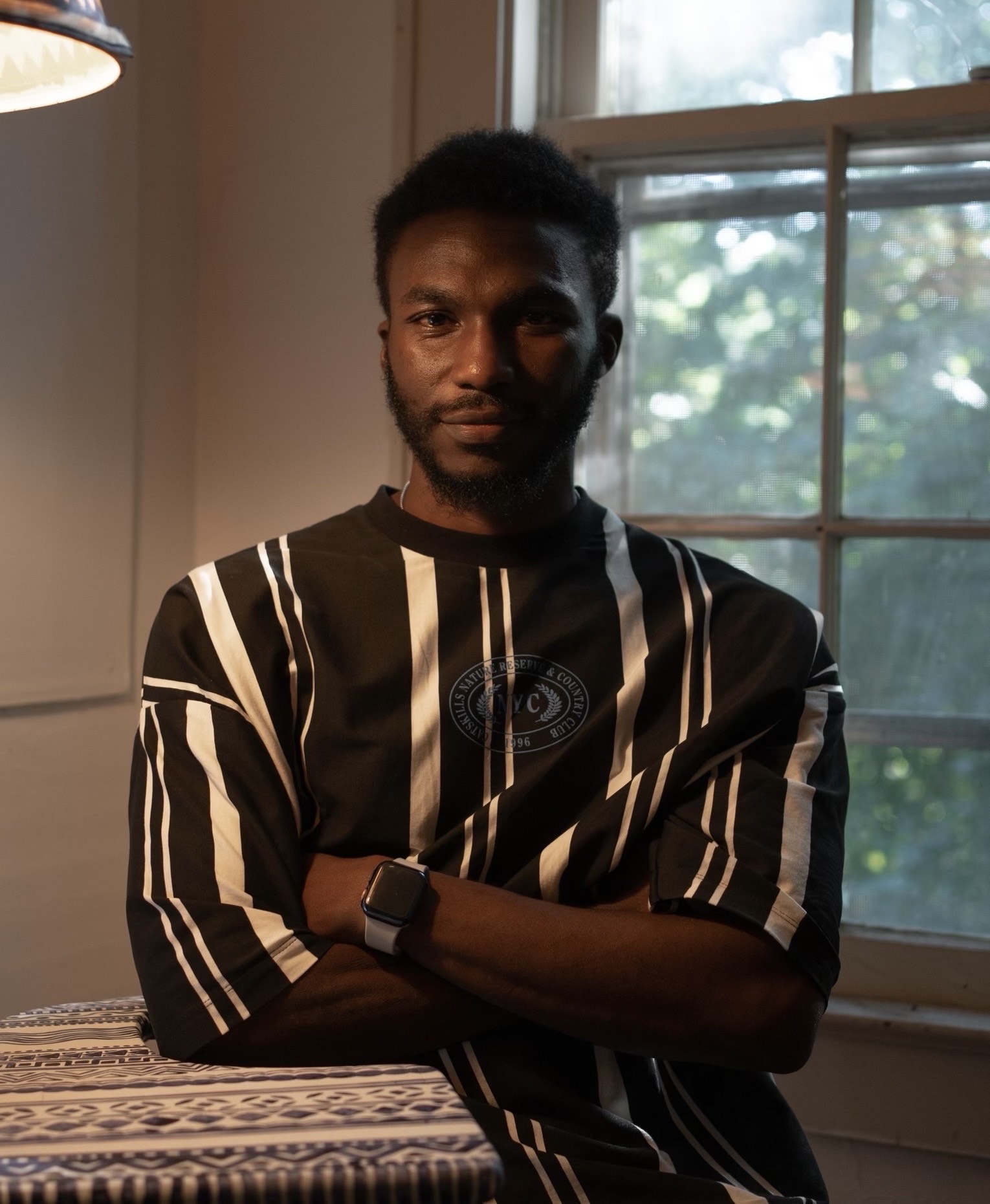
Born in Ibadan, Nigeria, in 1994, Akintayo Akintobi is a painter and educator whose work is rooted in African culture, family and lived experiences. Raised within the traditions of the Yoruba people, his artistic language is defined by brilliant colors, bold patterns, symbolic motifs and heavily textured canvases. His work explores themes of cross-cultural experiences and identity using layered imagery, texture and symbolism. Click this link to view Akintobi’s virtual exhibition.
Initially inspired by comic book illustrations, Akintobi recalls his journey began around age 7, when he spent hours drawing characters. Though comic imagery no longer appears overtly in his work, the early fascination with color and storytelling remains foundational. From drawing, he moved toward painting as his preferred medium, later expanding into mixed media and collage during college.
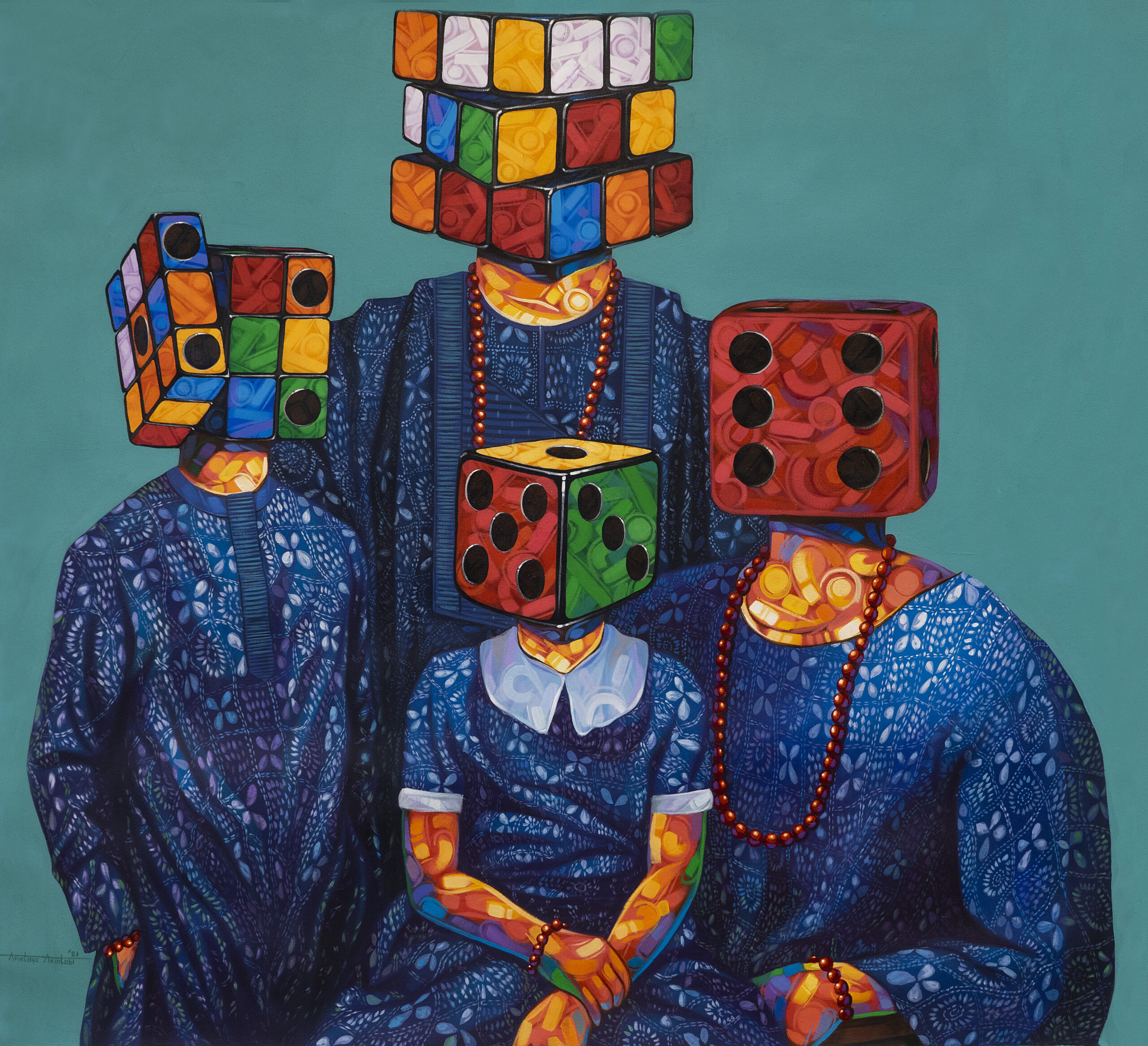
The emotional core of Akintobi’s work centers on family as the foundation of community and how we understand our world. Yoruba culture was integrated into his schooling and daily life through motifs and designs. “Pattern has been around me all my life,” he said. From his mother’s patterned clothing to the symbolic designs in cultural education, these visuals became second nature.
Today, recurring motifs such as zigzags, spirals and cowrie shells carry layered meanings. For Akintobi, zigzags represent life’s challenges.
“Life is not always flat,” he said. “Sometimes you have to climb mountains and walk down valleys.”
In his work, spirals symbolize tradition, ancestry and generational continuity. Cowrie shells represent wealth—not only financial prosperity, but also wisdom, community and longevity. “Wealth is not just money; it’s also people,” he said.
His creative process is fluid. Sometimes Akintobi begins with a clear concept; other times, he allows emotion, paint and material to guide the work. He often works on multiple pieces simultaneously, especially when developing a series. This allows the works to “communicate” with one another through shared palettes.
A defining material in his practice is sand. As a child, when art supplies were scarce, he drew in sand using his hands and feet.
“Sand, often overlooked or discarded, represents life, humility, ability and connection,” Akintobi said. “In ancient Yoruba culture, walking barefoot is common, symbolizing deep connection to the earth, spiritual grounding, shared humanity and community.”
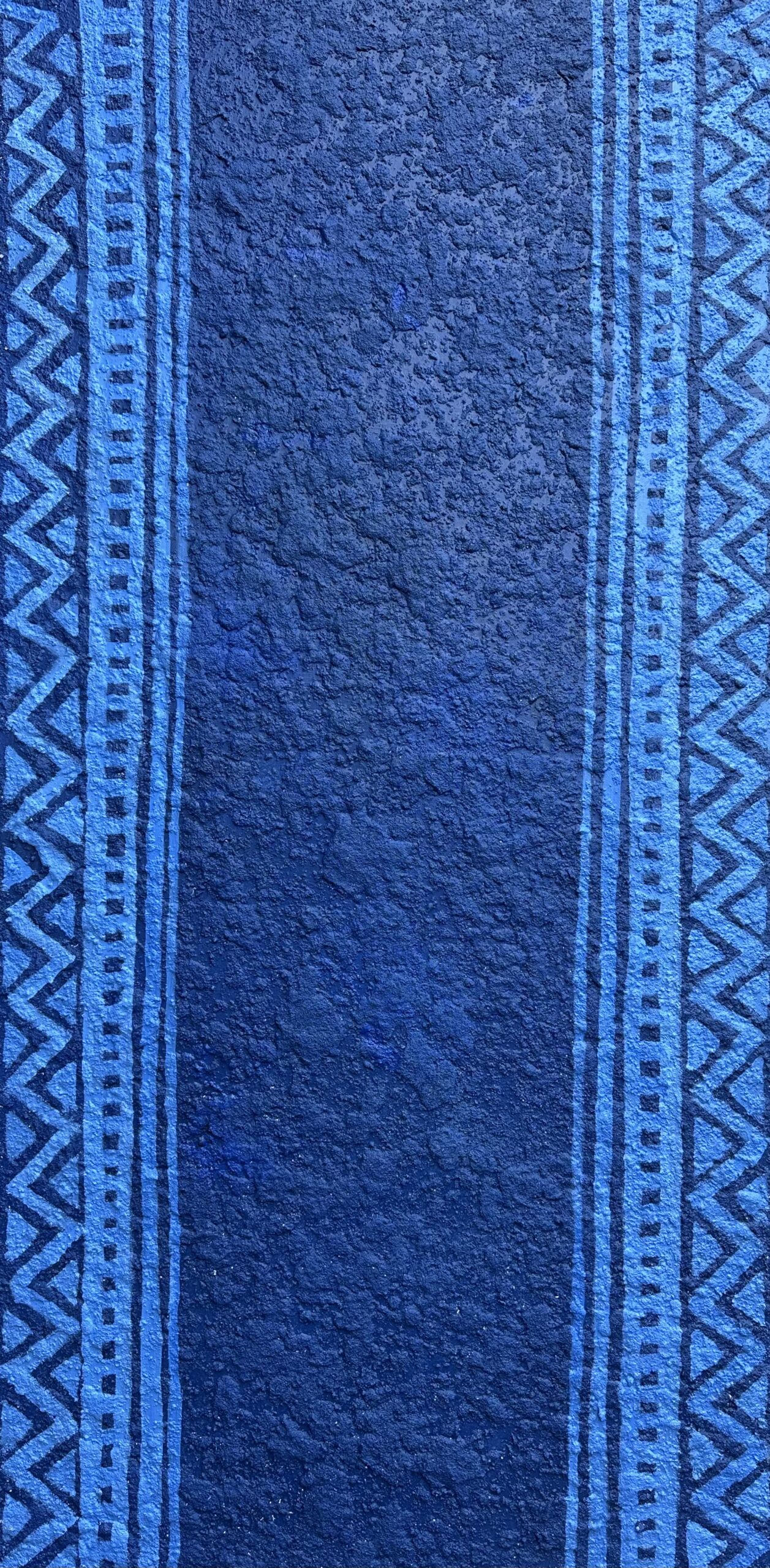
He is currently developing a body of work titled “Temple Walls,” an exploration of sand and the human body. In this series, he investigates the body as a structure or wall that houses identity. Drawing from the Christian notion that “the body is a temple,” Akintobi examines how internal elements define the self. The texture felt from the sand also plays a critical role here, acting as a conduit for memory, touch, and emotional connection.
Akintobi earned a Bachelor of Arts and Education degree, specializing in painting, from Obafemi Awolowo University in Nigeria. In 2021, he moved to Johnson City to attend East Tennessee State University for its scholarship support and faculty direction. He also served as an adjunct professor of 2D design at ETSU.
Living in East Tennessee has influenced his evolution, prompting him to rethink color and material. This shift has expanded his practice to include fabric and found objects. While bright color remains his most immediate expressive tool, he has become increasingly attentive to the emotional and symbolic meanings of color, as well as to letting materials speak for themselves. This shift has expanded his practice to include fabric, found objects, and layered textures, enriching both form and content.
Since moving to Johnson City, he has participated in exhibitions at the Tipton Gallery in Johnson City; Annie Hogan Byrd Gallery at Tusculum University in Greeneville, Tenn.; Mars Landing Galleries in Mars Hill, N.C.; William King Museum in Abingdon, Va.; the Kansas African American Museum in Wichita; and the Vestige Concept Gallery in Pittsburgh.
Akintobi has also created several public murals, such as “The Peace Global Crane Project,” a 23-by-54-foot mural; “Howdy from Lemmon, South Dakota,” a 12-by-35-foot mural; and “Snake II,” a 7-by-22-foot mural at the Alta Toro Restaurant in Atlanta. His work has been featured in media outlets including The Guardian, Vanguard, The Nation and the Johnson City Press.
Looking ahead, he envisions his art moving into public, community-centered spaces. He is interested in large-scale murals and site-specific installations that function as tools for reflection and healing. For Akintobi, art is also therapy. It’s an opportunity to address mental health and foster connection, and engage communities directly. An artistic practice that honors ancestry, embraces material memory, and invites viewers to reflect on family, identity, and the sacred spaces within themselves. Though he plans to visit Africa again, he hopes to maintain a practice between both continents, having built a home in both Nigeria and the United States. Learn more about his work here.