Fred Shepard
(n.d.) Lives and works in Murray, Kentucky
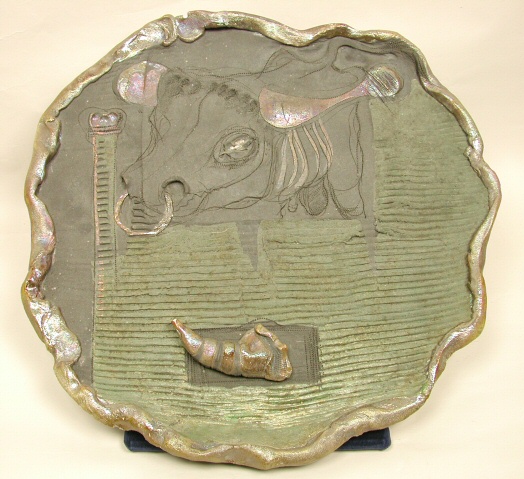
Injured Bull, 1973
raku, 1.25 x 20 x 20 inches, 93.39.210
In the spring of 1971, under the auspices of the International Academy of Ceramics, the Tennessee Arts Commission pledged its support for the promotion and establishment of the U.S. International Ceramic Symposiums. The Symposium’s mission to help develop a worldwide network of support for ceramic art was achieved by bringing together top ceramic artists from around the world for a month-long sharing of ideas and creation of innovative ceramics.
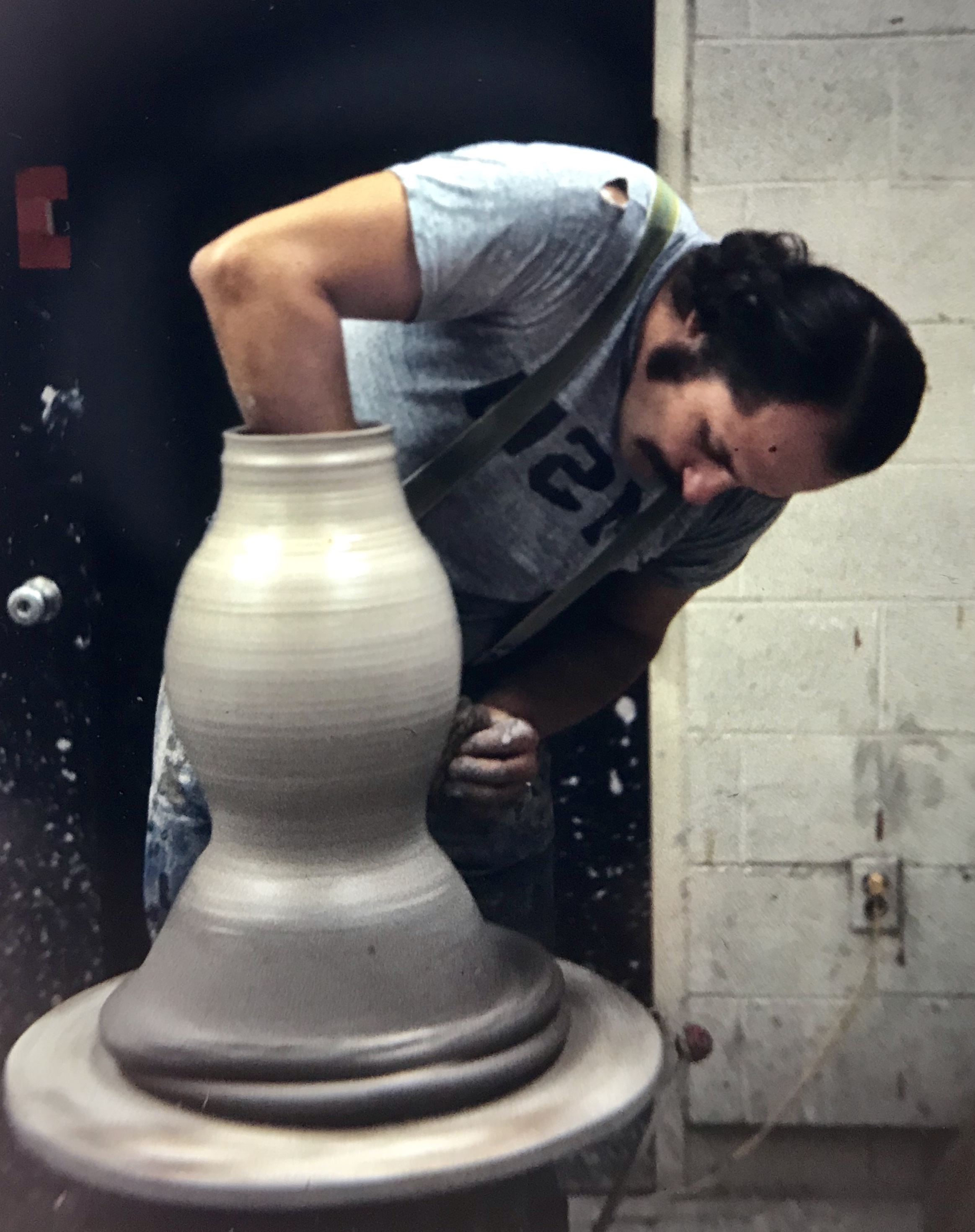
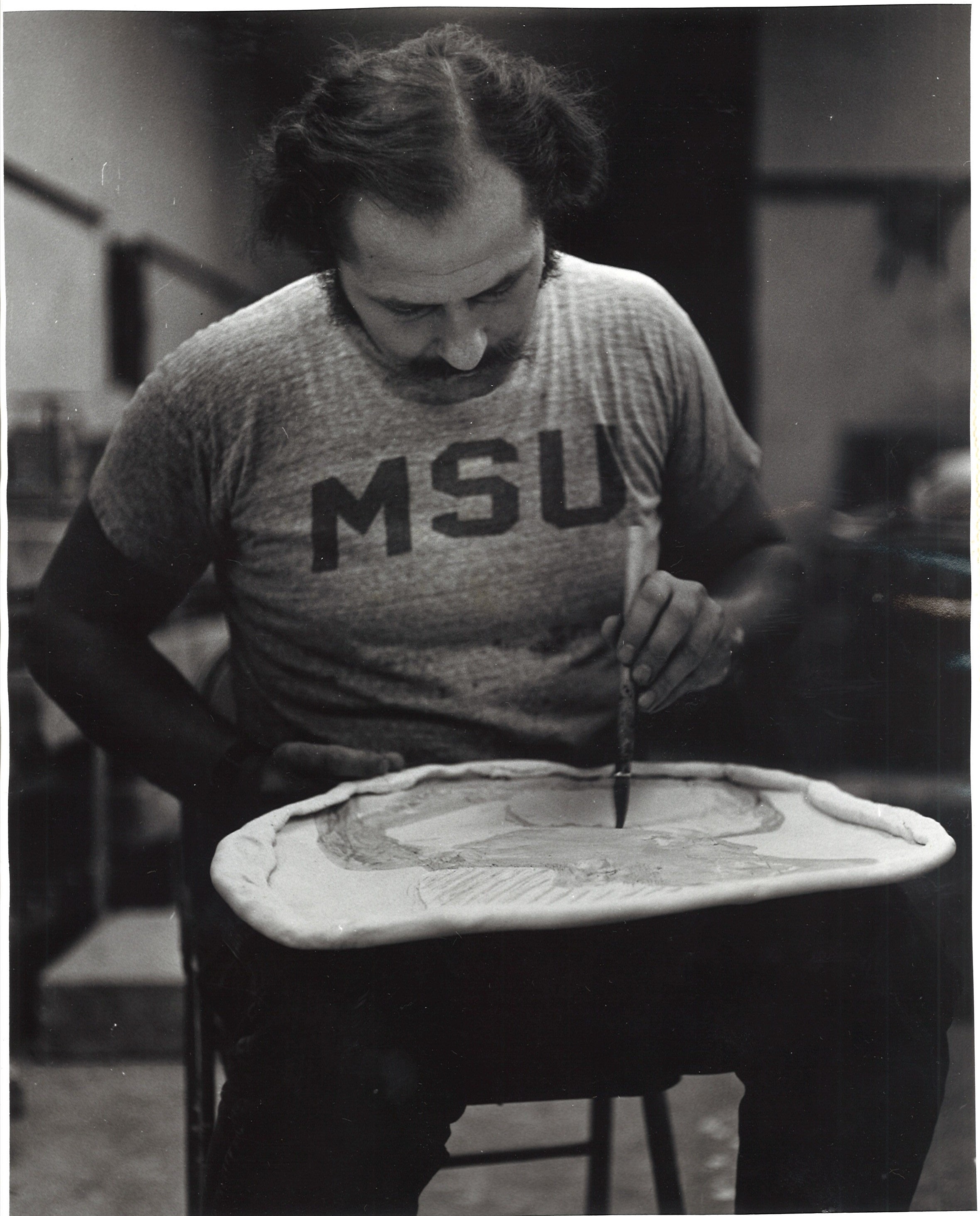
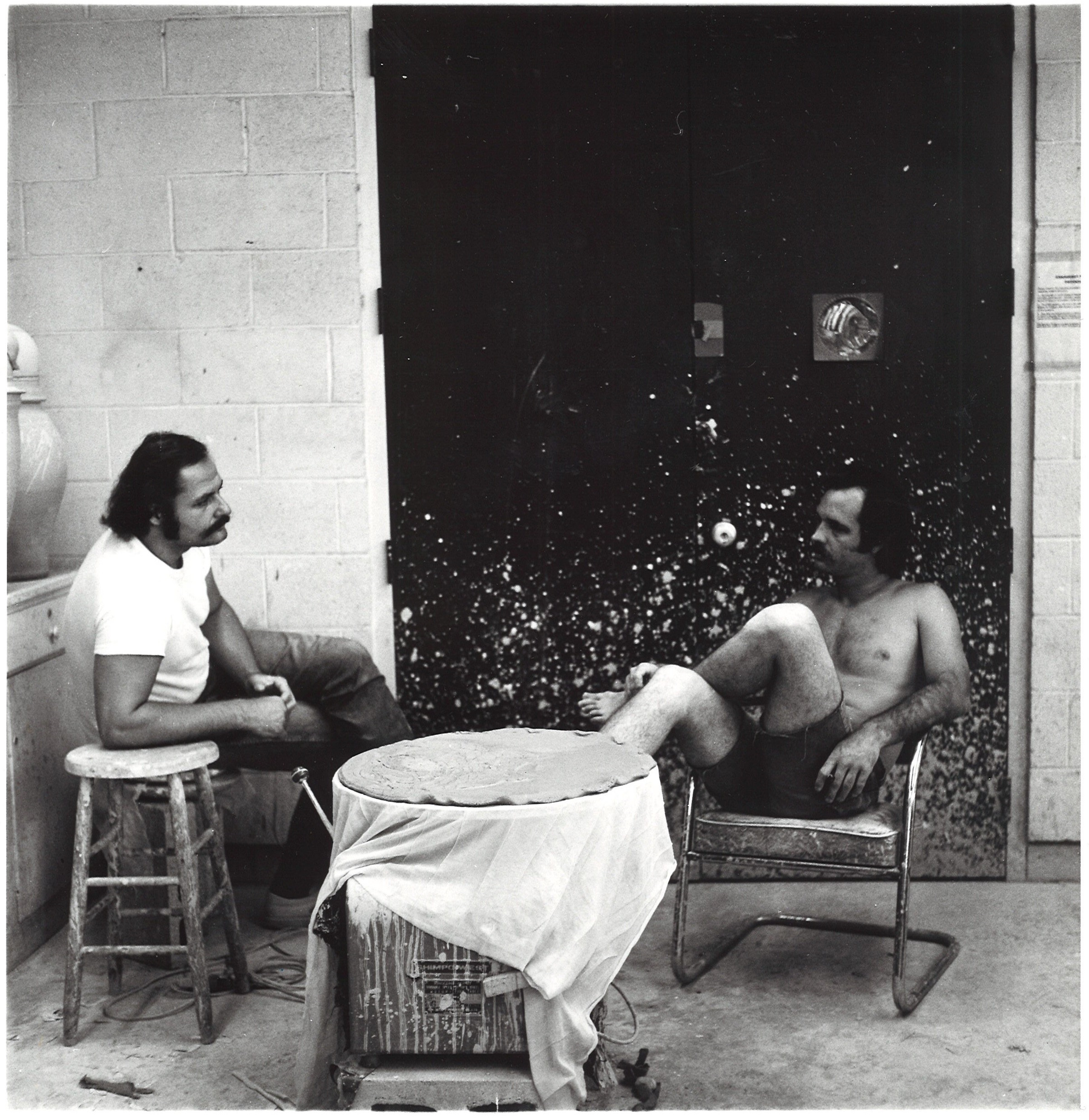
Left: Photo courtesy of Lewis Snyder Center: Fred Shepard draws with a brush on a large plate to be raku fired. Slip decoration and incising were used on this form.” (Ceramics monthly) Right: Fred Shepard and Tim Mather
Shepard represented the United States at the First U.S. International Ceramic Symposium, which consisted of twenty-five artists from thirteen different countries, and was hosted in the summer of 1973 at the Memphis Academy of Art. Shepard began his work at the Symposium by throwing large traditional forms on the wheel, reflecting is interest in creating larger than average ceramics. Even his raku pushes scale: while at the Symposium he made a collection of very large plates that feature animal imagery alongside incised patterns. These irregular plates take advantage of a variety of techniques and tools, such as brushing on colorful low-fire engobe slip, using luster glazes, partially burnishing the surfaces, and drawing patterns with a roulette marker, a cylindrical marker used to designate the winning number on a roulette board. In order to fire the plates, Shepard teamed up with fellow U.S. ceramicist Tim Mather to build a stacked-brick kiln large enough to accommodate several pieces. They were removed from the kiln using a special lifting device that Shepard constructed, and then were allowed to smoke for fifteen minutes before being dunked into a nearby pond.
Shepard loved teaching, and for 36 years taught ceramic art at Murray State University in Murray, Kentucky. He was heavily involved in the Kentucky Guild of Artists and Craftsmen, serving as the Guild’s president in the 1970’s. In the Guild’s early years, it turned a railroad car into a gallery that would travel across Kentucky, and Shepard organized the exhibit and workshops for the gallery’s stop in Murray. After his retirement, Shepard remained in Murray and started creating pottery full-time at his studio, Dogwood Pottery.
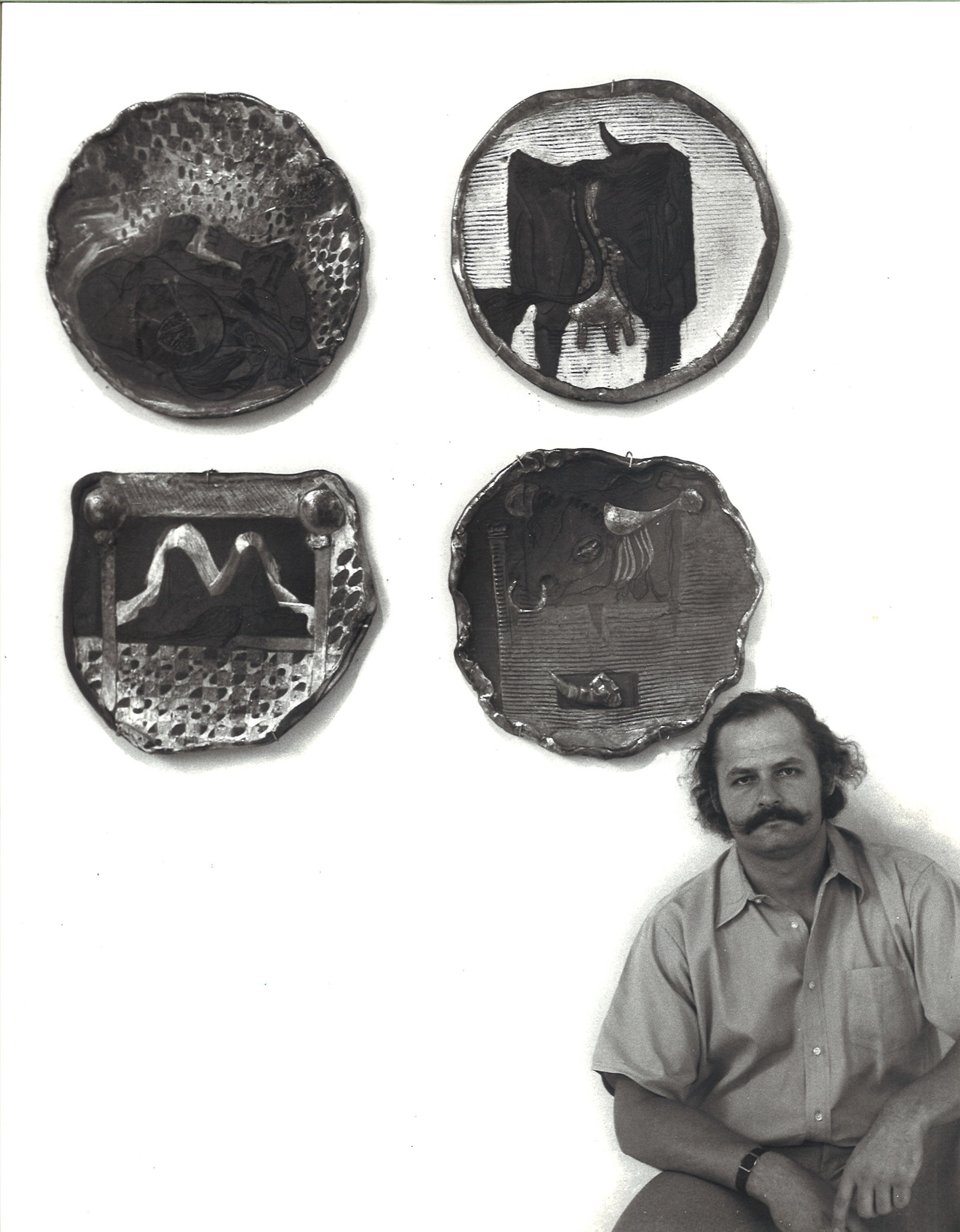
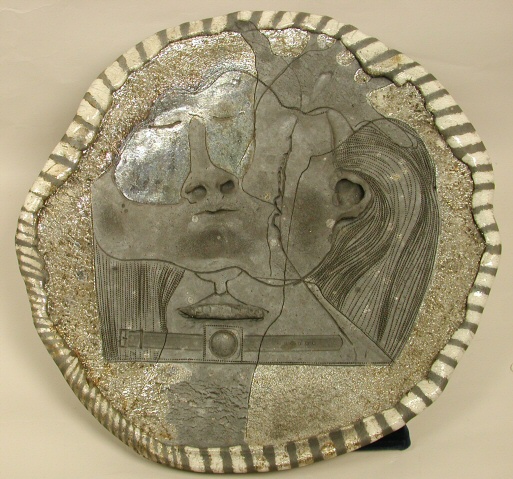
Left: Shepard with some of his work, Right: In Your Park…A Gorilla Sleeps, 1973, raku, 1.5 x 21.25 x 21.25 inches, 93.39.203
Fred works primarily in salt glazes and in raku. His thrown work, even though traditional in form, is much larger than average. His raku work is influenced by his interest and training in printmaking, as seen in his two-dimensional designs in the large flat trays… often a line design instead of color. – 1973 International Ceramic Symposium catalogue
Written by Aiden Layer, TN Arts Intern