Congratulations to the Recipients of the FY26 IAF in Literature
By Lee Baird, Director of Literary Arts
Tennessee is fortunate to have many professional authors working across a spectrum of literary genres. Publishing their work burnishes not only their reputations, but Tennessee’s as well; showing us a state with a thriving literary culture as well as a storied literary tradition. At the Tennessee Arts Commission (TAC) we are fortunate to be able to recognize some of these talents with the Individual Artist Fellowships in Literature. These annual prizes are awarded to outstanding Tennessee writers in the Categories of Fiction, Poetry, and Writing for Children or Young Adults. Let’s learn about the winners for fiscal year 2026 in their own words.
Fiction fellowship winner Hilary Bell of Nashville writes:
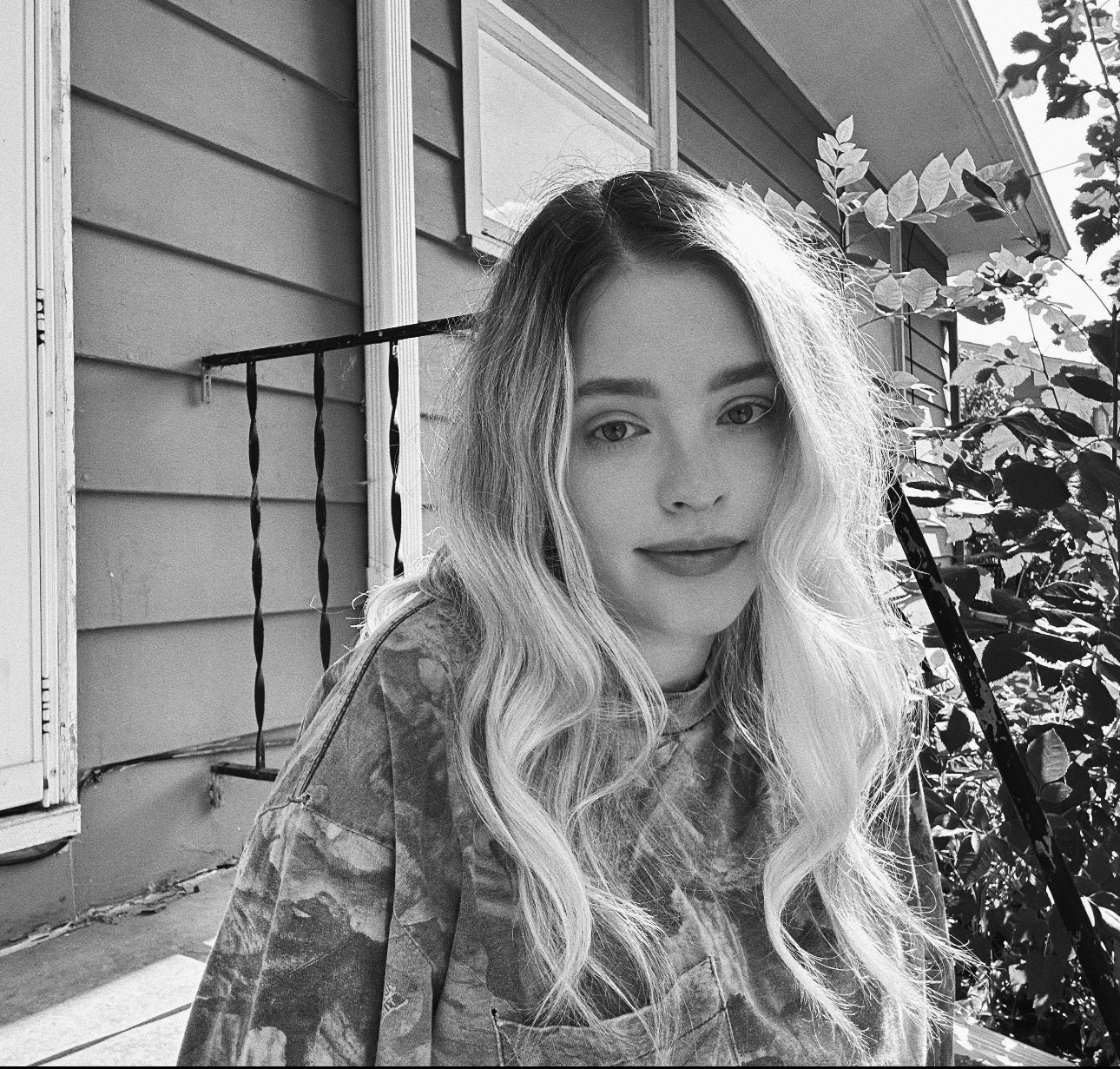
“I am a Nashville native and graduate of the Iowa Writers’ Workshop, where I taught undergraduate creative writing alongside classes for The Porch Writers’ Collective. I am currently at work on a collection of short stories, “Something Big,” which I hope to complete with the support of the Individual Artist Fellowship for literary fiction. Set in Tennessee, “Something Big” tracks the inhabitants of one fractured community as their hometown implodes around them. A love letter to a side of the South we don’t normally see, “Something Big” explores coming of age amid the financial crisis, mending lifelong friendships, and carving out a space between girlhood and disability. With tenderness and humor, these stories unfold against a vanishing Nashville, a rich and textured city that’s rarely portrayed in the literary imagination.”
Her work is interested in the role disability plays in life and literature. She asks, “What is a disability supposed to look like, and what happens when we make those assumptions?” I write stories that wrestle with these questions—that disrupt mainstream notions of desirability, gender, and sexuality. I’m also interested in building on the tradition of religiously contoured writers like Marilynne Robinson and Flannery O’Connor while challenging Southern stereotypes. More than anything, my work aims to explore the lived experience of disability in all its complexity, warts and all. So often in literature, disabled characters exist only as a foil for an able-bodied protagonist, there to inspire or to be patronized—a lesson on the hero’s path to self-actualization. When first drafting these stories, I vowed to change this. The protagonists found in “Something Big” are often reckless and defiant and joyful; the worlds they inhabit are unsanitized and spiky in their sensations. Most importantly, they have agency.
“Of receiving the Fellowship, Bell says, “My goal is to revise my current manuscript and complete five new stories, culminating in a polished linked collection or “novel in stories.” By covering vital living expenses, this fellowship will provide sustained creative focus, allowing me to immerse myself in the language, voice, and point of view of each individual story, while also shaping the collection’s overarching narrative and throughline.” Bell added, “Thank you again for this life-changing award. I’m honored and inspired to continue this work with your support.”
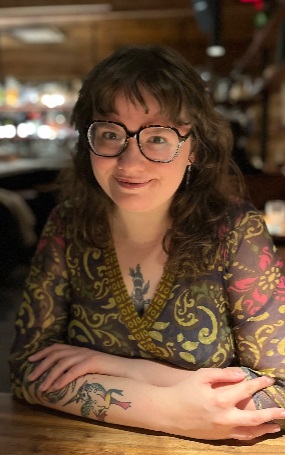
Poet Em Palughi was raised on the Gulf Coast of Alabama and now resides in Nashville. Much of her work centers on climate grief. She says, “I’ve witnessed several species go extinct in my home state during my lifetime. I’ve seen the effects of rising tides: fewer fish, dying semi-aquatic plants, strange weather, hurricanes that destroy the homes of my peers. I have also seen my father fall victim to the same lax system as the land: he died last year, a victim of the opioid epidemic, with no health insurance, access to hospice, or home. My poems are exploring these two scales of grief: the global and the personal. I interrogate the border between animal and man and present a bioregion that includes human beings as active members, harmed by climate change just as much as the extinct birds.”
“I am interested in blending ecopoetics and the confessional to achieve this: I am in conversation with writers like Sharon Olds and Sylvia Plath as well as Gary Snyder and Forrest Gander. Human pain and the pain of an ecosystem are linked: often, the systemic violence affecting my life has the same source as the systemic destruction of the environment. The people in my poems are often interacting with animals, confessing to them, or represented by them: blurring the line between animal and human hurt.”
Palughi writes, “These (Fellowship) funds will allow me to continue my work in the Nashville community. Since applying for this fellowship, I have facilitated a writing workshop for those experiencing loss and have been selected by The Porch to teach a workshop on eco-grief poetics in the fall. I am passionate about teaching poetry, especially to those who are new to writing, and I am excited to begin further community-facing teaching endeavors that are generative and accessible.”
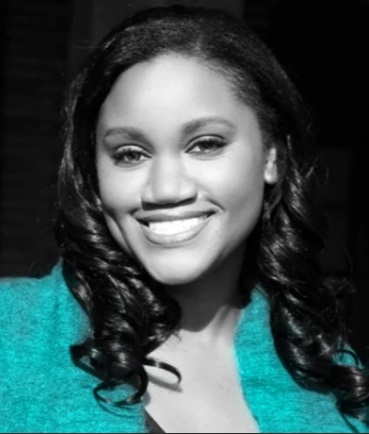
Young Adult Literature Fellow Tonya Abari tells us:
“My writing ambitions in children’s literature have always stemmed from the desire to amplify the voices of the unheard through compelling narratives, history, and an emphasis on cultural traditions. In the current climate where BIPOC stories are being banned by school districts across the nation, I find myself continually returning to these very stories as inspiration for my own writing. I stand on the shoulders of trailblazing authors like Virginia Hamilton, Toni Morrison, Nikki Giovanni, Jacqueline Woodson, Brandy Colbert, and Kelly Starling Lyons to share stories of hope, joy, and resilience within the Black community.”
“My work in children’s literature ranges from the joy of everyday life to highlighting unsung heroes who, although they have been left out of the textbooks, have made significant contributions to American history. Often focusing on the intricacies of Black culture and tradition, my work is a portfolio of mirrors and windows. This work is a call to action for children and adults alike to learn and appreciate the diversity of our world.”
Abari writes: “With the support of the TN Arts Commission, I will be able to commit to working on this book for roughly two months while securing reliable childcare for my two young children. I’ve been working from home, writing, and caring for children simultaneously–and I cannot articulate how much of a relief it will be to have that uninterrupted time.” She concluded, “Again, I am very grateful for this award–and will gladly acknowledge this in the book (2027 release!).”
Please join me in congratulating the 2026 Literary Fellows and looking forward to their continued success. Applications for the 2027 Fellowships are open now and Creative Nonfiction has been added as a new category along with Fiction, Poetry and Children’s/Young Adult Literature. See the TAC website for more details.